
 Arizona Diamondbacks
 Atlanta Braves
 Baltimore Orioles
 Boston Red Sox
 Chicago Cubs
 Chicago White Sox
 Cincinnati Reds
 Cleveland Guardians
 Colorado Rockies
 Detroit Tigers
 Houston Astros
 Kansas City Royals
 Los Angeles Angels
 Los Angeles Dodgers
 Miami Marlins
 Milwaukee Brewers
 Minnesota Twins
 New York Mets
 New York Yankees
 Oakland Athletics
 Philadelphia Phillies
 Pittsburgh Pirates
 San Diego Padres
 San Francisco Giants
 Seattle Mariners
 St. Louis Cardinals
 Tampa Bay Rays
 Texas Rangers
 Toronto Blue Jays
 Washington Nationals
 Atlanta Hawks
 Boston Celtics
 Brooklyn Nets
 Charlotte Hornets
 Chicago Bulls
 Cleveland Cavaliers
 Dallas Mavericks
 Denver Nuggets
 Detroit Pistons
 Golden State Warriors
 Houston Rockets
 Indiana Pacers
 Los Angeles Clippers
 Los Angeles Lakers
 Memphis Grizzlies
 Miami Heat
 Milwaukee Bucks
 Minnesota Timberwolves
 New Orleans Pelicans
 New York Knicks
 Oklahoma City Thunder
 Orlando Magic
 Philadelphia 76ers
 Phoenix Sun
 Portland Trailblazers
 Sacramento Kings
 San Antonio Spurs
 Toronto Raptors
 Utah Jazz
 Washington Wizards
 Arizona Cardinals
 Atlanta Falcons
 Baltimore Ravens
 Buffalo Bills
 Carolina Panthers
 Chicago Bears
 Cincinnati Bengals
 Cleveland Browns
 Dallas Cowboys
 Denver Broncos
 Detroit Lions
 Green Bay Packers
 Houston Texans
 Indianapolis Colts
 Jacksonville Jaguars
 Kansas City Chiefs
 Las Vegas Raiders
 Los Angeles Chargers
 Los Angeles Rams
 Miami Dolphins
 Minnesota Vikings
 New England Patriots
 New Orleans Saints
 New York Giants
 New York Jets
 Philadelphia Eagles
 Pittsburgh Steelers
 San Francisco 49ers
 Seattle Seahawks
 Tampa Bay Buccaneers
 Tennessee Titans
 Washington Commanders
 Anaheim Ducks
 Arizona Coyotes
 Boston Bruins
 Buffalo Sabres
 Calgary Flames
 Carolina Hurricanes
 Chicago Blackhawks
 Colorado Avalanche
 Columbus Blue Jackets
 Dallas Stars
 Detroit Red Wings
 Edmonton Oilers
 Florida Panthers
 Los Angeles Kings
 Minnesota Wild
 Montreal Canadiens
 Nashville Predators
 New Jersey Devils
 New York Islanders
 New York Rangers
 Ottawa Senators
 Philadelphia Flyers
 Pittsburgh Penguins
 San Jose Sharks
 Seattle Kraken
 St. Louis Blues
 Tampa Bay Lightning
 Toronto Maple Leafs
 Vancouver Canucks
 Vegas Golden Knights
 Washington Capitals
 Winnipeg Jets
Guides
How Attack on Titan Patches Became a Symbol Beyond the Anime
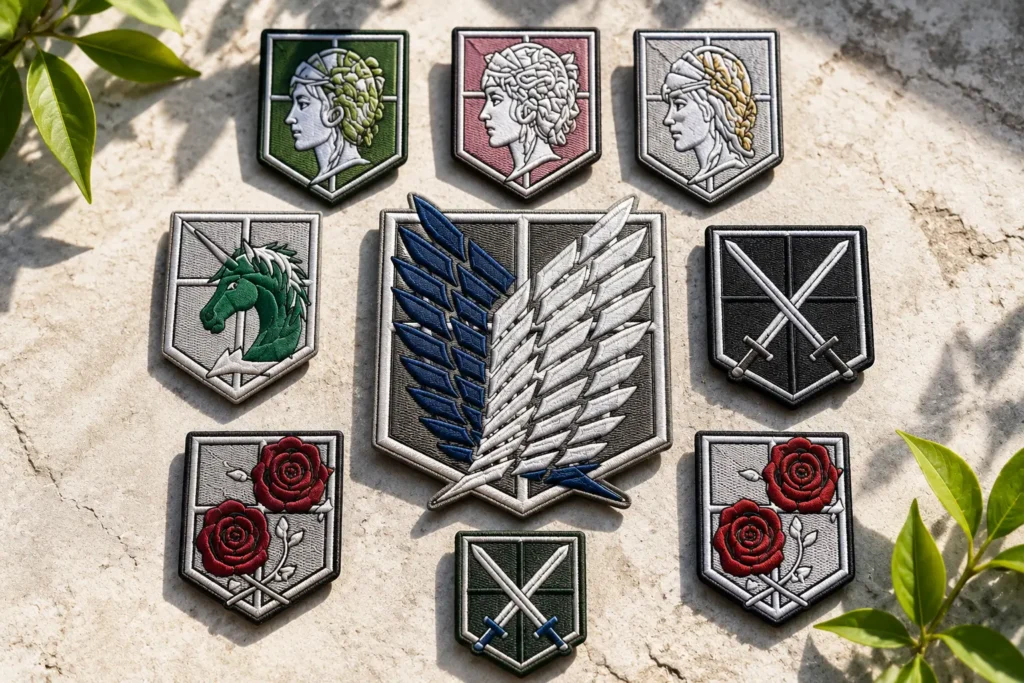
Attack on Titan was never just a show about giants eating people. It was a show about walls, and who gets to stand on which side of them. That’s probably why its patches never stayed confined to backpacks and jean jackets worn by anime fans. They turned into something people wear for what the symbols mean: fight for something bigger than yourself, or die trying.
Hajime Isayama’s manga started in 2009, the anime followed in 2013, and eleven years later the emblems from that world still show up on military-style jackets that have nothing to do with cosplay. Here’s what each one actually represents, and why the designs earned that kind of staying power.
Eren Yeager: The Face of the Fight
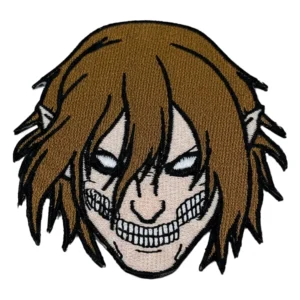
The Attack on Titan Eren Yeager Titan Face Patch isn’t really about Eren the person. It’s about Eren the moment: the second a scrawny cadet turns into a fifteen-meter monster and starts swinging at other monsters. That transformation is the show’s whole engine. A kid with nothing but rage and a bad plan becomes powerful enough to actually do something about it, and the cost of that power turns out to be most of the plot. Put his Titan face on a patch and you’re not wearing a character. You’re wearing the idea that fury, pointed in the right direction, can move a wall.
The Three Walls: Maria, Rose, and Sina
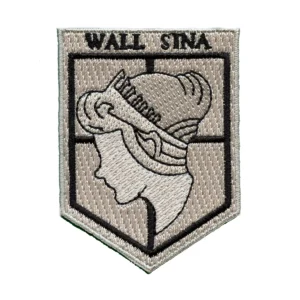
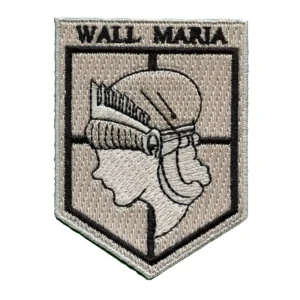
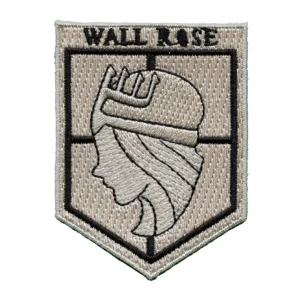
Before there were regiments, there were walls, and the walls have their own story worth knowing. King Fritz built three concentric barriers a century before the series starts, using the power of the Founding Titan, and he named them after his three daughters: Maria on the outside, Rose in the middle, Sina at the center, closest to the throne. It’s a strange thing to name a fortress after your kids, but it fits a show obsessed with what parents pass down to their children, walls included.
Wall Maria falls first, in the very first episode, and that single event sets off everything that follows. The Attack on Titan Wall Maria Regiment Shield Patch carries the weight of that loss: it’s the wall that failed, the one whose collapse turns Eren from a kid with a temper into a kid with a mission. The Wall Rose Regiment Logo Patch represents the fallback line, the wall humanity retreats behind and barely holds. And the Wall Sina Regiment Shield Patch stands for the wall furthest from danger, home to the people who’d rather not think about what’s happening at the edges. Three walls, three different relationships to fear.
The Military Branches: Wings, Roses, and a Unicorn
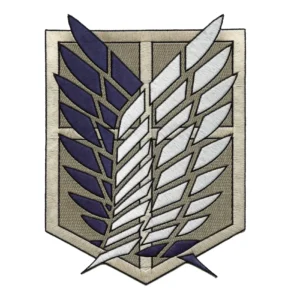
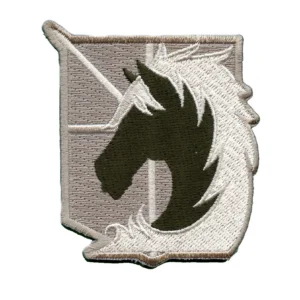
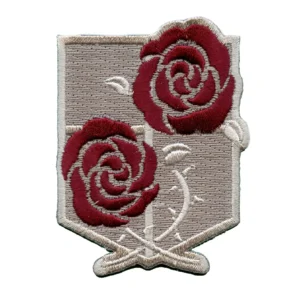
Once you’re old enough to fight, you join one of three branches, and each one wears its purpose on its sleeve, literally.
The Survey Corps is the one that actually leaves the walls to fight Titans on open ground, which is exactly why their casualty rate runs so high. Their symbol is a pair of wings, one blue and one white, known across the fandom as the “Wings of Freedom.” It’s the most recognized image the series ever produced. The Attack on Titan Wings of Freedom Patch and the Attack on Titan Survey Corps both carry that emblem, one as a clean standalone wing design and the other as the full Survey Corps crest, cape and all. Either way, it’s shorthand for choosing to walk toward the thing that scares you.
The Garrison, sometimes called the Stationary Guard in the English dub, patrols the walls themselves rather than the land beyond them. Their emblem is a pair of roses, which sounds soft until you remember roses have thorns. The Attack on Titan Stationary Guard Roses Patch represents the soldiers who hold the line so everyone behind them can pretend the world is safe.
Then there’s the Military Police Brigade, the branch reserved for the top ten graduates of any cadet class, tasked with guarding the king instead of fighting Titans. Their symbol is a green unicorn, and the irony is baked right in: the most privileged soldiers in the story wear a mythical creature while everyone else fights real monsters. The Attack on Titan Military Police Brigade Unicorn Patch is a reminder that not every uniform in this world means the same thing.
Cadet Corps: Where Every Story Starts
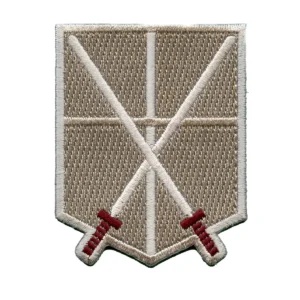
Before any of that, everyone starts in the same place. The Attack on Titan Cadet Corps Training Corps Patch represents the training years, the stretch of the story where Eren, Mikasa, Armin, and the rest of their class are just kids learning to use gear that could kill them if they get it wrong. It’s easy to skip past this part when you’re focused on the war later, but the show spends real time here for a reason. Every soldier who dies in a later season was once a cadet standing in a formation, deciding which branch to join and why.
The Colossal Titan: Where It All Began
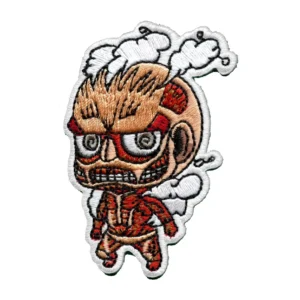
The Attack on Titan Chibi Smoke Colossal Titan Patch takes the single most terrifying image in the pilot episode, a Titan taller than the wall itself, wreathed in steam, and renders it small and stylized. That contrast is the appeal. The Colossal Titan is the reason Wall Maria falls in the first place, the inciting incident for the entire series. Shrinking that horror down to something cute doesn’t undercut it. It’s fans taking ownership of the thing that scared them, the same way horror movie merch turns slashers into plush toys.
Why the Symbols Outgrew the Show
None of these patches are just merchandise with a character slapped on. Each one comes from a world built entirely around choosing a side, whether that’s a wall, a regiment, or a fight worth risking your life for. That’s a rare thing for a piece of fabric to carry. Pin the Wings of Freedom to your jacket and you’re not just telling people you watched a show. You’re borrowing a symbol that, in its own story, meant walking past the wall everyone else was hiding behind.
