
 Arizona Diamondbacks
 Atlanta Braves
 Baltimore Orioles
 Boston Red Sox
 Chicago Cubs
 Chicago White Sox
 Cincinnati Reds
 Cleveland Guardians
 Colorado Rockies
 Detroit Tigers
 Houston Astros
 Kansas City Royals
 Los Angeles Angels
 Los Angeles Dodgers
 Miami Marlins
 Milwaukee Brewers
 Minnesota Twins
 New York Mets
 New York Yankees
 Oakland Athletics
 Philadelphia Phillies
 Pittsburgh Pirates
 San Diego Padres
 San Francisco Giants
 Seattle Mariners
 St. Louis Cardinals
 Tampa Bay Rays
 Texas Rangers
 Toronto Blue Jays
 Washington Nationals
 Atlanta Hawks
 Boston Celtics
 Brooklyn Nets
 Charlotte Hornets
 Chicago Bulls
 Cleveland Cavaliers
 Dallas Mavericks
 Denver Nuggets
 Detroit Pistons
 Golden State Warriors
 Houston Rockets
 Indiana Pacers
 Los Angeles Clippers
 Los Angeles Lakers
 Memphis Grizzlies
 Miami Heat
 Milwaukee Bucks
 Minnesota Timberwolves
 New Orleans Pelicans
 New York Knicks
 Oklahoma City Thunder
 Orlando Magic
 Philadelphia 76ers
 Phoenix Sun
 Portland Trailblazers
 Sacramento Kings
 San Antonio Spurs
 Toronto Raptors
 Utah Jazz
 Washington Wizards
 Arizona Cardinals
 Atlanta Falcons
 Baltimore Ravens
 Buffalo Bills
 Carolina Panthers
 Chicago Bears
 Cincinnati Bengals
 Cleveland Browns
 Dallas Cowboys
 Denver Broncos
 Detroit Lions
 Green Bay Packers
 Houston Texans
 Indianapolis Colts
 Jacksonville Jaguars
 Kansas City Chiefs
 Las Vegas Raiders
 Los Angeles Chargers
 Los Angeles Rams
 Miami Dolphins
 Minnesota Vikings
 New England Patriots
 New Orleans Saints
 New York Giants
 New York Jets
 Philadelphia Eagles
 Pittsburgh Steelers
 San Francisco 49ers
 Seattle Seahawks
 Tampa Bay Buccaneers
 Tennessee Titans
 Washington Commanders
 Anaheim Ducks
 Arizona Coyotes
 Boston Bruins
 Buffalo Sabres
 Calgary Flames
 Carolina Hurricanes
 Chicago Blackhawks
 Colorado Avalanche
 Columbus Blue Jackets
 Dallas Stars
 Detroit Red Wings
 Edmonton Oilers
 Florida Panthers
 Los Angeles Kings
 Minnesota Wild
 Montreal Canadiens
 Nashville Predators
 New Jersey Devils
 New York Islanders
 New York Rangers
 Ottawa Senators
 Philadelphia Flyers
 Pittsburgh Penguins
 San Jose Sharks
 Seattle Kraken
 St. Louis Blues
 Tampa Bay Lightning
 Toronto Maple Leafs
 Vancouver Canucks
 Vegas Golden Knights
 Washington Capitals
 Winnipeg Jets
Uncategorized
Why Hockey Fans Love Patch Collecting More Than Other Sports
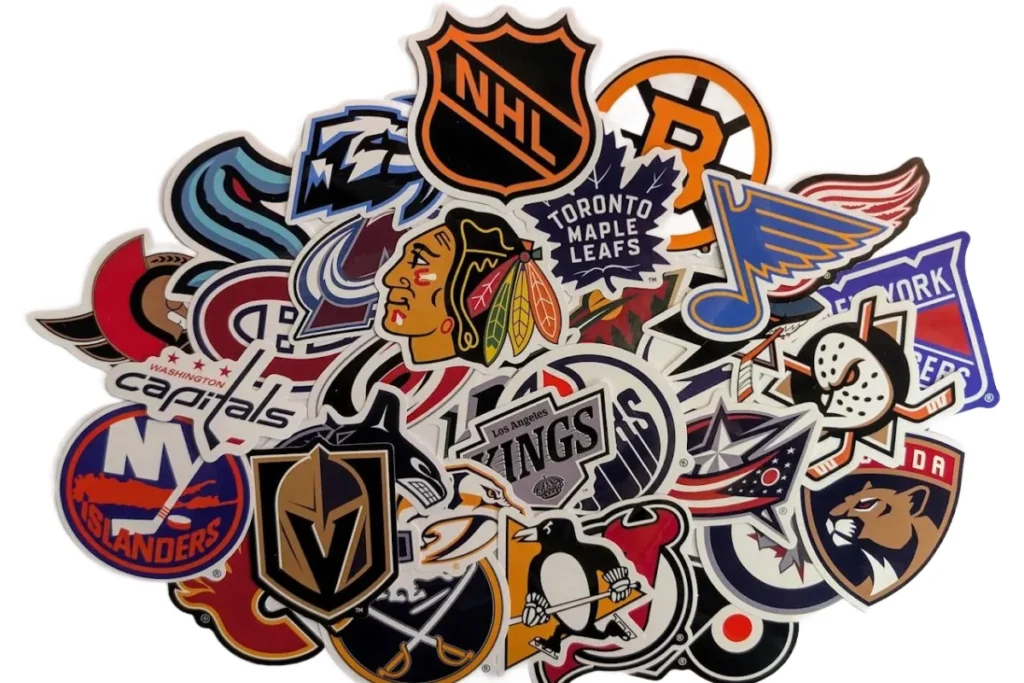
Every sport has patches now. Baseball has them, football has them, basketball has them. But spend any time around hockey collectors specifically, at a Winter Classic Fan Fest, in a game-worn jersey forum, at a junior hockey rink where parents are sewing crests onto their kid’s gear, and the intensity is different. Here’s my case for why hockey’s patch culture runs deeper than the other three major leagues, even if I’ll admit some of this comes down to taste.
Pin trading came first, and it never really left
Long before jersey patches were a league-wide thing in any sport, hockey fans were trading enamel pins the way Olympic athletes and staff have done since the 1896 Athens Games. That habit carried straight into hockey’s own outdoor-game culture.
At the Winter Classic, Stadium Series, and Heritage Classic, fans line up for hours at Fan Fest tents not just to watch the game but to trade pins and get custom cards made, a ritual that’s been running at Winter Classics since the very first one in Buffalo in 2008. No other North American pro league has an equivalent pregame trading culture built into the fan experience at this scale. It’s borrowed straight from the Olympics, and hockey is the only major U.S. sport that’s fully absorbed it.
Every outdoor game gets its own one-time patch
This is the part that turns casual fans into collectors almost by accident. The NHL now runs three separate outdoor game series, the Winter Classic, the Stadium Series, and the Heritage Classic, and nearly every edition comes with its own throwback uniform and its own commemorative patch, worn for that one game and then retired. A Winter Classic jersey isn’t just a jersey with a patch on it. It’s a specific, dated artifact tied to a specific stadium and a specific matchup, which is exactly the kind of scarcity collectors chase. Baseball and football have dabbled in one-off throwbacks, but nothing else in North American sports produces a brand-new, single-use commemorative patch at this pace, multiple times a year, every year.
Hockey jerseys can carry more than one patch at once
Because the sleeve real estate on a hockey sweater is generous compared to a basketball tank top, and because the NHL doesn’t ration commemorative patches the way some leagues do, it’s common for a single jersey to be stacked with two or three patches in the same season.
One well-documented Detroit Red Wings jersey from 2017 carried the NHL’s centennial “NHL 100” patch on one shoulder, an inaugural-season patch for the team’s new arena on the other, and a memorial patch for longtime owner Mike Ilitch, all three at once. For a collector, that’s not one story stitched onto a jersey. It’s three, layered on top of each other, which makes hockey jerseys unusually dense with information compared to a single-patch football or baseball uniform.
The memorial tradition is more personal than people expect
Hockey didn’t always have a strong memorial-patch habit. Uni Watch’s own tracking of the practice once noted that hockey’s memorial tradition looked thin compared to other sports, pointing to the black “31” the Flyers wore in 1985 for goaltender Pelle Lindbergh as one of the earliest examples.
But the tradition has deepened noticeably since then, and some of the results are among the most specific, least generic memorial patches in any sport. When Vancouver Canucks owner Frank Griffiths died the day before a 1994 playoff game, the team didn’t reach for a generic black band. They stitched “2 Pts. F.G.” onto the jersey, a private reference to Griffiths’ habit of asking players for “two points” instead of just a win.
When the entire Lokomotiv Yaroslavl team died in a 2011 plane crash, the Pittsburgh Penguins and Washington Capitals both wore patches for a team that wasn’t even in their league, an idea that reportedly came directly from Evgeni Malkin. The New York Rangers didn’t wear a patch for a former player until 2021, when Hall of Famer Rod Gilbert died, and the design incorporated his actual retired number and signature rather than a generic tribute. These aren’t leaguewide mandates. They’re specific, often player-driven gestures, and that specificity is part of why collectors care.
The culture starts at the grassroots, not just the pro level
Go to a junior hockey rink, a beer league, or a youth tournament and you’ll find the same instinct at a much smaller scale: teams sewing custom crests onto jerseys to mark a season, an anniversary, or the loss of a teammate. It’s common enough that when a minor hockey association in Saskatchewan tried to ban a homemade memorial patch for a 15-year-old player who’d died, over 1,600 people signed a petition to reverse it. That’s not something you see with the same intensity around youth baseball or football uniforms. Hockey’s patch instinct doesn’t start in an NHL boardroom. It runs all the way down to house-league teams making their own, which is probably the clearest sign of a sport where the fans and players actually think in patches.
So is it really more than the other sports?
Reasonable people can disagree here. Baseball collectors will point to a century-plus head start and a much bigger vintage card market, and NBA jersey-patch memorabilia has become a genuinely enormous business through the trading card side.
What hockey has that the others don’t is the combination of all of it at once: an Olympic-style trading culture, a steady stream of one-off outdoor game patches, jerseys that stack multiple patches at a time, and a memorial tradition that reaches from the NHL all the way down to a house-league team in Saskatchewan. That combination, more than any single patch, is what makes hockey collectors a different kind of obsessive.
