
 Arizona Diamondbacks
 Atlanta Braves
 Baltimore Orioles
 Boston Red Sox
 Chicago Cubs
 Chicago White Sox
 Cincinnati Reds
 Cleveland Guardians
 Colorado Rockies
 Detroit Tigers
 Houston Astros
 Kansas City Royals
 Los Angeles Angels
 Los Angeles Dodgers
 Miami Marlins
 Milwaukee Brewers
 Minnesota Twins
 New York Mets
 New York Yankees
 Oakland Athletics
 Philadelphia Phillies
 Pittsburgh Pirates
 San Diego Padres
 San Francisco Giants
 Seattle Mariners
 St. Louis Cardinals
 Tampa Bay Rays
 Texas Rangers
 Toronto Blue Jays
 Washington Nationals
 Atlanta Hawks
 Boston Celtics
 Brooklyn Nets
 Charlotte Hornets
 Chicago Bulls
 Cleveland Cavaliers
 Dallas Mavericks
 Denver Nuggets
 Detroit Pistons
 Golden State Warriors
 Houston Rockets
 Indiana Pacers
 Los Angeles Clippers
 Los Angeles Lakers
 Memphis Grizzlies
 Miami Heat
 Milwaukee Bucks
 Minnesota Timberwolves
 New Orleans Pelicans
 New York Knicks
 Oklahoma City Thunder
 Orlando Magic
 Philadelphia 76ers
 Phoenix Sun
 Portland Trailblazers
 Sacramento Kings
 San Antonio Spurs
 Toronto Raptors
 Utah Jazz
 Washington Wizards
 Arizona Cardinals
 Atlanta Falcons
 Baltimore Ravens
 Buffalo Bills
 Carolina Panthers
 Chicago Bears
 Cincinnati Bengals
 Cleveland Browns
 Dallas Cowboys
 Denver Broncos
 Detroit Lions
 Green Bay Packers
 Houston Texans
 Indianapolis Colts
 Jacksonville Jaguars
 Kansas City Chiefs
 Las Vegas Raiders
 Los Angeles Chargers
 Los Angeles Rams
 Miami Dolphins
 Minnesota Vikings
 New England Patriots
 New Orleans Saints
 New York Giants
 New York Jets
 Philadelphia Eagles
 Pittsburgh Steelers
 San Francisco 49ers
 Seattle Seahawks
 Tampa Bay Buccaneers
 Tennessee Titans
 Washington Commanders
 Anaheim Ducks
 Arizona Coyotes
 Boston Bruins
 Buffalo Sabres
 Calgary Flames
 Carolina Hurricanes
 Chicago Blackhawks
 Colorado Avalanche
 Columbus Blue Jackets
 Dallas Stars
 Detroit Red Wings
 Edmonton Oilers
 Florida Panthers
 Los Angeles Kings
 Minnesota Wild
 Montreal Canadiens
 Nashville Predators
 New Jersey Devils
 New York Islanders
 New York Rangers
 Ottawa Senators
 Philadelphia Flyers
 Pittsburgh Penguins
 San Jose Sharks
 Seattle Kraken
 St. Louis Blues
 Tampa Bay Lightning
 Toronto Maple Leafs
 Vancouver Canucks
 Vegas Golden Knights
 Washington Capitals
 Winnipeg Jets
Uncategorized
How NFL Teams Use Patches for Anniversary Seasons
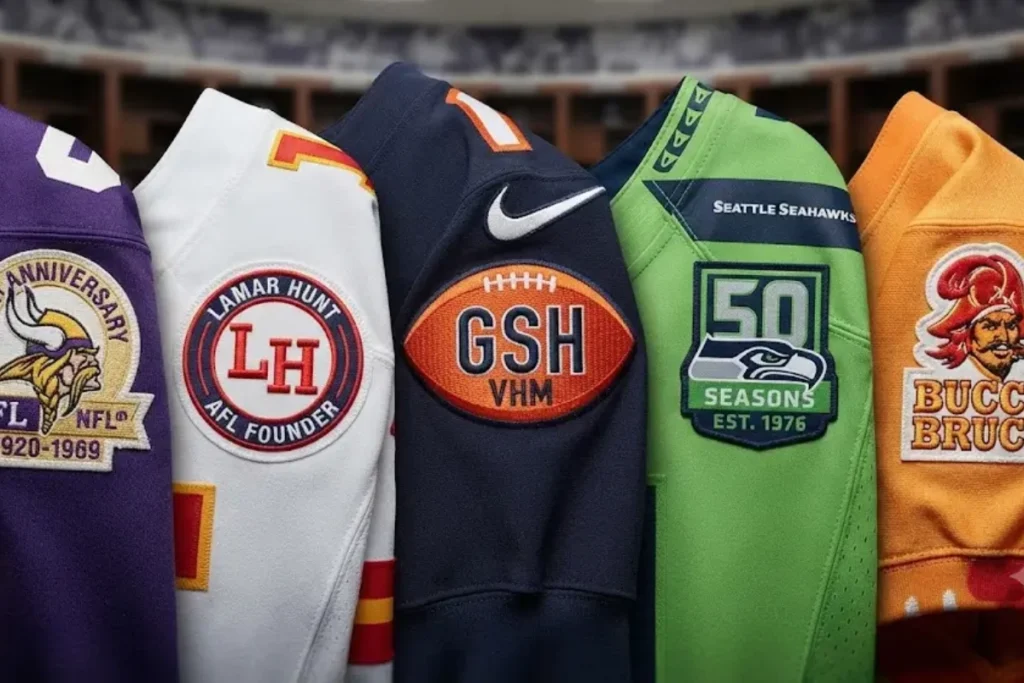
There’s a specific kind of NFL fan who spots a weird little emblem on a jersey in the first quarter and immediately starts googling instead of watching the game. I’m that fan. Anniversary patches are small, but they’re basically the league’s way of putting a footnote on live television, and once you know how to read them, you start noticing them everywhere.
The league sets the tone first
The NFL didn’t start with team-by-team anniversary patches. It started league-wide, and it took decades to even get there. The first jersey patches in Super Bowl history showed up in Super Bowl IV, played in January 1970, when the Vikings and Chiefs wore patches marking their leagues’ anniversaries: 50 years for the NFL and 10 years for the AFL. Every NFL team had already worn that 50th anniversary patch throughout the 1969 season, so the Super Bowl appearance was really the closing scene of a full-season campaign, not a one-off.
The league repeated the formula for its 75th anniversary in 1994, when teams again wore a commemorative patch and many paired it with throwback uniforms for select games, an idea that was still novel in pro sports at the time. Some of those throwbacks got the helmet-jersey combo wrong, since research on old uniforms wasn’t what it is now, but the enthusiasm was real.
By the time the NFL hit its 100th season in 2019, the anniversary patch had become an expected ritual rather than a special occasion. Every team wore the “NFL 100” patch that year, and the league leaned harder into throwbacks than ever before. The Bears branded their whole season “Bears100” and debuted a new throwback uniform to go with it. Other teams followed similar playbooks, mixing a season-long patch with one or two dedicated throwback games.
Then teams started doing their own thing
League-wide anniversaries happen once a decade or so. Team anniversaries happen every year somewhere in the NFL, which is why individual franchises have built their own patch traditions independent of whatever the league is doing.
The Kansas City Chiefs are a good example of a team that treats this as an ongoing habit rather than a occasional gesture. They marked 40 years as a franchise in 1999 with a patch combining the old AFL logo and the team logo, then marked 40 years in Kansas City specifically in 2002 with a patch built around “The Scout,” the franchise’s mascot figure, set against the city skyline. When founder Lamar Hunt died in 2006, Clark Hunt commissioned a memorial patch that players wore starting in 2007, a design meant to tie his father’s legacy directly to the AFL’s formation.
Other teams tend to save the patch treatment for round numbers. In the 2025 season, both the Seattle Seahawks and Tampa Bay Buccaneers wore patches marking their 50th seasons as franchises. The Seahawks’ patch used two shades of blue, one pulled from their original 1976 logo and one from their current color scheme, with “EST 1976” stitched across the top. The Buccaneers went a different route, producing a “Creamsicle” version built around Bucco Bruce, the pirate mascot from their original orange, red, and white color scheme. For 2026, the San Francisco 49ers are marking 80 years since their 1946 founding with a patch tied to a new anniversary logo, worn across the full season rather than a single game.
Memorial patches follow a separate track
Not every NFL patch is a celebration. When a Hall of Fame figure connected to a franchise dies, teams often respond with a patch rather than a full uniform change, since a patch can go into production fast and still say something specific. The Chicago Bears did this twice with the same family: once in 1983 after founder George Halas died, and again for the 2025 season after Virginia Halas McCaskey passed away at 102. The second patch, an orange football with a navy “M” for McCaskey, was designed as a near match to the one worn for Halas more than 40 years earlier, which made the connection between the two tributes obvious to longtime fans without the team having to explain it.
Why patches instead of new uniforms
A full uniform redesign is expensive, slow to approve, and risky if fans hate it. A patch does almost the same emotional work for a fraction of the cost and none of the risk. It gives broadcasters something to mention, gives merchandise a reason to exist for one season only, and gives the team a way to acknowledge its own history without committing to it permanently. That’s probably why the pace has picked up: what used to be a once-a-decade league event is now something several teams do independently in any given year.
None of that makes the patches feel less genuine when you look at specific cases. The Bears wearing Virginia McCaskey’s initials in the same style her father-in-law’s memorial patch used decades earlier isn’t marketing logic dressed up as sentiment. It’s a franchise reaching for the same gesture twice because it still means the same thing the second time.
